
Regulated Products
Moving Ecommerce Platforms Without Rebuilding Your Store
Changing ecommerce platforms can sound simple until you start listing everything that has to move: catalog, content, URLs, redirects, and customer relationships. Here's how to migrate without rebuilding your store from scratch.
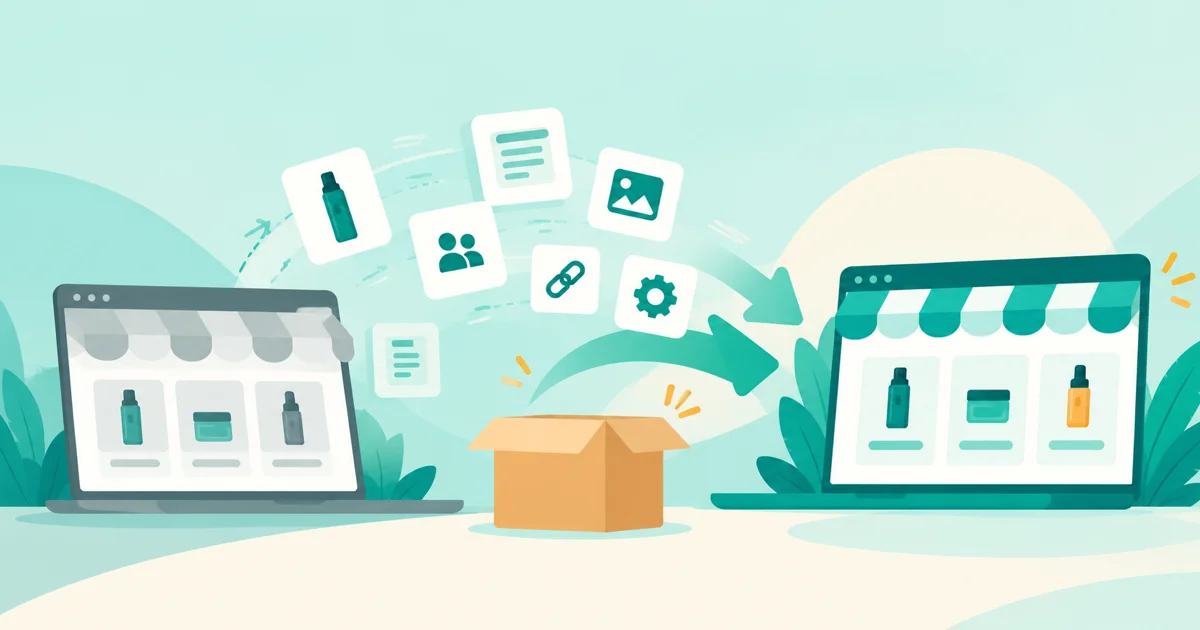
Changing ecommerce platforms can sound simple until you start listing everything that has to move.
Your product catalog is only the beginning. There are product descriptions, images, brand content, policies, customer relationships, URLs, redirects, structured data, and years of storefront work to account for.
For regulated ecommerce businesses, replatforming can be even more complicated. Product attributes, restrictions, required checks, and other compliance requirements may also affect how the store operates.
That creates a real barrier to switching platforms, even when the current platform is no longer the right fit.
Ecommerce platform migration does not have to mean manually rebuilding your store.
Token of Trust Storefront is a managed commerce platform for regulated sellers with legal but restricted products. Its migration approach starts with what you have already built and determines what can travel with you, from your catalog and content to URLs and other important store information.
The goal is continuity: preserve what matters, preview the new environment, check the migration, and make the final cutover with a clearer understanding of what will change.
Replatforming should not mean starting over
A mature ecommerce store represents years of accumulated work.
Every product description that has been refined, every policy that has been reviewed, every customer relationship that has been built, and every page that search engines already know about has value.
An ecommerce platform migration should account for that existing investment.
With Storefront, the process starts by identifying what needs to move and what can travel with you. Depending on your existing store and migration scope, that may include:
- Your product catalog
- Brand and storefront content
- URLs and redirect structure
- Customer information
- Other store data and assets included in your migration scope
Instead of assuming the new storefront needs to be recreated manually, the starting point is the business you already have.
You are moving an existing ecommerce operation, not starting with an empty store.
Protect the SEO foundation you've already built
Moving your store also means accounting for the search presence that has grown around it.
Existing pages may already appear in search results. Customers and other websites may link to your content. Search engines already know many of your URLs and how they relate to one another.
Changing ecommerce platforms can disrupt that foundation if URLs, redirects, content, or site structure change without a plan.
Storefront's migration approach is designed to preserve your content, URL structure, and redirect map and sequence the migration around protecting what search engines already know about your site.
That does not mean rankings or organic traffic can be guaranteed. No ecommerce platform can control how search engines rank a site after a migration.
The objective is to protect the parts of your SEO foundation that can be controlled: your content, URL structure, redirects, and the accessibility of the pages you want customers and search engines to find.
Storefront also supports public product and category pages with readable content and structured catalog data, giving search engines a clear way to access and understand the storefront after the move.
Bring the business you've built with you
A platform migration is about more than transferring products from one database to another.
Your store includes the content customers read, the catalog they shop, the domain they recognize, and the customer relationships your business has built.
Storefront is designed around a clear division of responsibility.
Token of Trust runs the hosted ecommerce platform, including hosting, scaling, security patches, platform releases, recovery, checkout, and the compliance services enabled for your store.
You keep your domain, catalog, content, customers, payment relationship, and approval over customer facing changes.
That distinction matters during a platform move because the goal is not simply to recreate your storefront somewhere else. It is to move into a new environment without unnecessarily giving up the business assets you have already built.
Preview your migrated store before you commit
One of the hardest parts of changing ecommerce platforms is committing to the move before you know what the new experience will actually look like.
Storefront is designed so your team, agency, or developers can work in preview before changes become part of the live storefront.
That gives you an opportunity to review the result before customers see it.
Depending on the scope of your migration, that review can include:
- Product and catalog information
- Storefront content
- Important pages and links
- URLs and redirects
- Applicable compliance checks
- The customer facing experience
The process separates building from releasing.
Changes can be prepared in preview, checked, reviewed by your team, and then included in a live release.
For regulated businesses, that review step is especially useful because a platform change is not only about whether the new store looks right. It is also about whether the store works the way the business needs it to.
Validate the move before you switch over
Preview lets you see the migrated storefront. Checks help determine whether it is ready to move forward.
Storefront's release workflow includes checks for content and links, applicable compliance requirements, and redirects before a change reaches the live environment.
Check your content and catalog
Review the products, content, images, and other store information included in your migration scope.
The objective is straightforward: make sure the storefront reflects the information you expect customers to see.
Check important URLs and redirects
Important existing URLs should continue to lead customers and search engines to the intended destination.
Where URLs change, redirect mapping becomes part of maintaining continuity between the old store and the new one.
Check applicable compliance requirements
For regulated merchants, the storefront may also depend on controls that affect the order path.
Storefront can support services such as age verification, identity checks, excise tax, and other specialized compliance services based on what you sell and where you ship. Those services are scoped separately according to the needs of the store.
Review before release
Once the relevant checks are complete, your team or agency reviews the changes before they join a live release.
That means the final cutover does not have to be the first time you see how the new storefront works.
Moving platforms is only part of the decision
A better migration process can make changing ecommerce platforms more manageable.
But how you move is only part of the decision.
You are also deciding where your business will operate next.
For regulated sellers, that decision can involve more than catalog management, merchandising, and checkout. The store may also need to support required controls based on the products being sold, the customer, and where an order is going.
Storefront is a managed commerce platform built around those requirements.
Token of Trust operates the platform and checkout. The compliance services selected for the store work inside the order path. The merchant keeps the domain, catalog, content, customers, and payment relationship.
That creates a different destination for the migration.
You are not simply moving an existing store onto another general purpose ecommerce platform. You are moving into an environment designed for regulated commerce while keeping ownership of the business assets that matter.
What should you know before migrating to Storefront?
Migration scope depends on the store you have today and what needs to move.
A standard Storefront launch can include an agreed configuration, a standard theme, import of merchant ready catalog data, a compatible approved payment connection, review, walkthrough, and cutover.
More complex migrations may require additional scoping. That can include catalog cleanup, custom design, integrations, workflow development, or other migration work beyond a standard launch.
That is why the process starts by understanding your current store rather than assuming every migration looks the same.
Tell us what you sell, where you ship, and what needs to move, including your URLs, content, catalog, and customer list. A continuity assessment can help identify what can travel with you and whether Storefront is a fit.
Ecommerce platform migration FAQ
Will migrating to a new ecommerce platform affect our search rankings?
It can. Changing URLs, redirects, content, or site structure can affect how search engines understand and surface your site.
No ecommerce platform can guarantee rankings after a migration. With Storefront, we preserve your content, URL structure, and redirect map and sequence the migration around protecting what search engines already know about your site.
What can we bring with us to Storefront?
Start with the parts of your store that matter to continuity: your URLs, content, catalog, and customer list.
What can move depends on your existing store, the condition of your data, and the scope of the migration. Our free continuity assessment helps identify what can travel with you and whether Storefront is a fit before you commit to a migration plan.
Does every Storefront migration include the same setup and migration work?
No. The work depends on what you're bringing over and what your new Storefront needs.
A standard Starter launch covers a standard theme, agreed configuration, import of merchant ready catalog data, a compatible approved payment connection, review, walkthrough, and cutover. More complex migration, catalog cleanup, custom design, integrations, or workflow development are scoped separately.
Growth and Scale implementations are scoped individually.
What happens to our store and data if we eventually leave Storefront?
Your business assets are designed to remain yours.
Through our Own Your Exit commitment, your source package, content, assets, catalog information, and URL structure can go with you through a coordinated engagement with our team. It is not a self service export or a guarantee, but the principle is important: moving to Storefront should not mean giving up control of the business you've built.
Planning an ecommerce platform move?
Changing platforms should not automatically mean rebuilding the store you have spent years creating.
Start by understanding what can travel with you.
Tell us what you sell, where you ship, and what needs to move. Token of Trust's free continuity assessment can help identify what can come with you and whether Storefront is the right fit for your business.
Keep what you've built. See the change before your customers do. Move to commerce built for regulated sellers.