
FDA’s 2026 Enforcement Guidance for Vape Retailers: Three Inventory Risk Tiers Every Store Needs to Understand
FDA issued final guidance on May 8, 2026, clarifying how it will prioritize enforcement against unauthorized ENDS products. The guidance does not legalize products without marketing authorization. It creates a three-tier framework for inventory risk.
It changes what every online vape retailer should stock. It also changes what they should verify and document. If you sell vapor products, here is how we now classify your current inventory.
What FDA’s May 8 Guidance Actually Changed
Before May 8, the enforcement picture for vape retailers was genuinely murky. FDA’s earlier view was that a pending PMTA gave no safe harbor.
The agency also quietly removed its webpage listing products with “timely filed” applications.
Those products were no longer part of its enforcement priorities. Retailers had no clear signal for which unauthorized products were high-risk versus lower-risk.
The May 8 guidance changes that. FDA published final guidance titled “Enforcement Priorities for Certain New Tobacco Products Marketed Without Premarket Authorization,” effective immediately. The core message: The FDA will focus less on enforcing rules for products that meet certain application criteria. The FDA will also increase pressure on products with no PMTA pathway.
This is not a legalization. Companies continue to market unauthorized products illegally under the FD&C Act. What changed is how FDA allocates its enforcement resources. That distinction matters for every retailer making purchasing decisions right now.
PACT Act compliance guide for online vape retailers
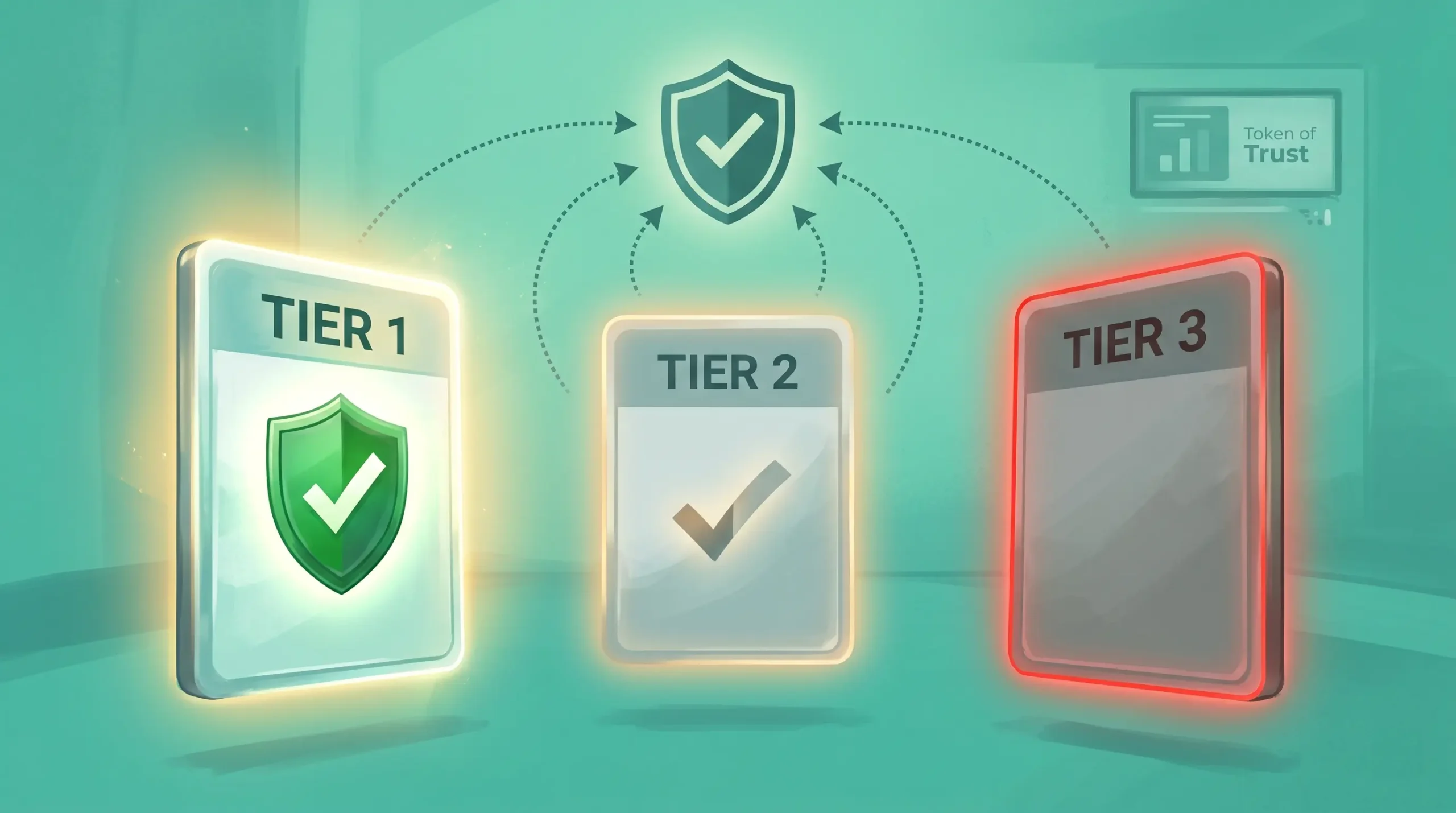
The Three-Tier Vape Inventory Risk Framework
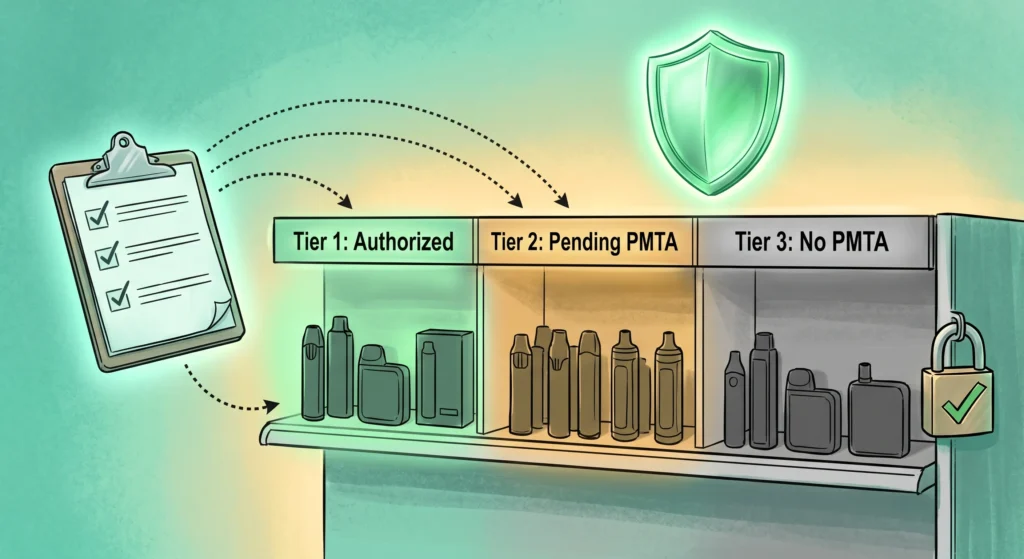
Understanding where each product in your catalog falls determines your exposure. Here are the three tiers as established by the May 8 guidance.
Tier 1 — Products with an FDA Marketing Granted Order
These products completed the full PMTA review.
FDA gave written authorization for legal marketing in the United States. Selling these products carries no PMTA-related enforcement risk.
As of May 5, 2026, authorized ENDS brands include:
- Glas G2 includes the device and a tobacco pod. It also includes the first authorized non-tobacco, non-menthol pods. The pods are Classic Menthol, Fresh Menthol, Gold, and Sapphire.
- JUUL device with Virginia Tobacco and Menthol JUULpods
- Vuse Alto Power Unit with tobacco-flavored pods
- NJOY ACE and NJOY Daily lines (tobacco and menthol variants)
- Logic Pro, Logic Power, and Logic Vapeleaf lines
- ZYN nicotine pouches
- ON! PLUS nicotine pouches
The Glas May 5 authorization is historically significant. It marks the first time FDA has authorized ENDS products in non-tobacco, non-menthol flavor categories. The list is at fda.gov/tobacco-products/market-and-distribute-tobacco-product/tobacco-products-marketing-orders. Each new authorization updates it.
Tier 2 — Products with an Accepted, Filed PMTA
FDA will deprioritize enforcement against products that meet all of the following conditions:
- The product is covered by a PMTA submitted on or after November 4, 2021, that has been accepted and filed by FDA.
- For non-tobacco flavored ENDS products, the application must include data the FDA needs.
- This data helps the FDA decide if the product protects public health (APPH standard).
Key clarification: an accepted application is not the same as a filed application. A filed application has passed FDA’s threshold review and is under active scientific evaluation. Simply receiving an acceptance letter is not sufficient.
Additionally, certain red flags will still trigger enforcement even for Tier 2 products:
- Cartoon-style characters on packaging
- Devices disguised as toys, phones, or gaming platforms
- Unusually high nicotine concentrations
- No child-resistant packaging
FDA has indicated it will publish a list of manufacturers and products that qualify under this policy. That list does not exist yet as of this publication.
Tier 3 — Products with No PMTA or a Denied PMTA
Products in this tier carry the highest enforcement exposure. This includes:
- Products where no PMTA was ever submitted
- Products where the PMTA was denied and no court stay is in effect
- Products where the submitted PMTA has not reached accepted-and-filed status
FDA is working closely with the Department of Justice, Customs and Border Protection, and other agencies.
They seize and destroy Tier 3 products at U.S. borders and in stores. This is the tier that includes the majority of unauthorized disposable vapes currently on the market.
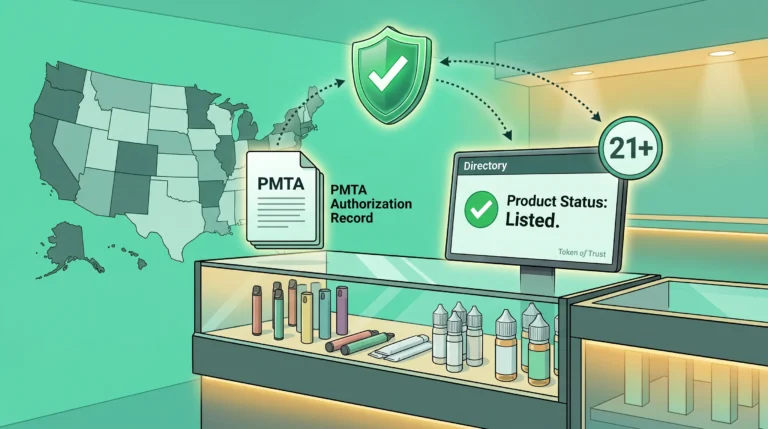
How to Verify Your Inventory Against the FDA PMTA Database
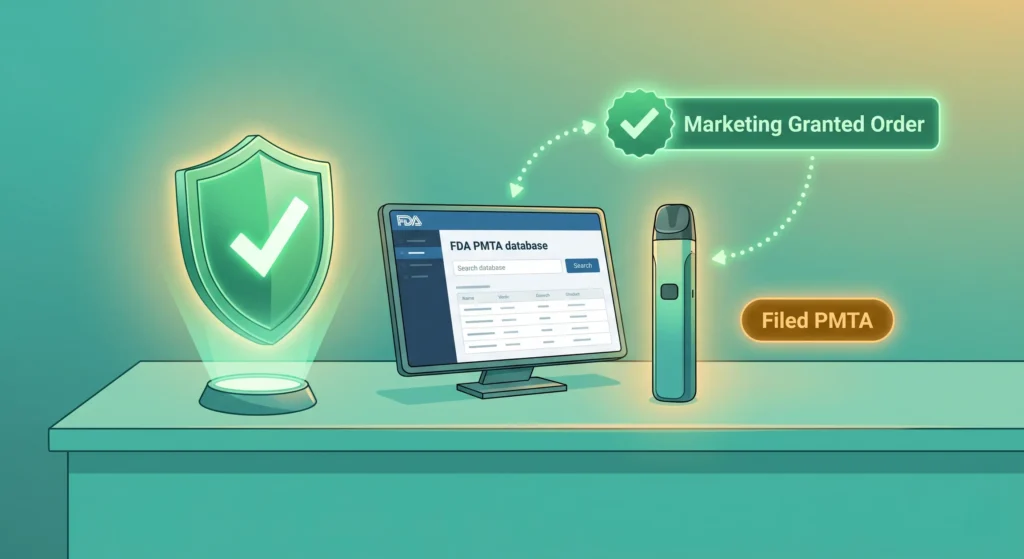
Step 1: Go to fda.gov and navigate to the Tobacco Products Marketing Orders page.
Step 2: For each SKU you carry, search by brand and product name. The database lists authorized products by manufacturer and order date.
Step 3: For products not on the authorized list, check if the manufacturer publicly states their PMTA was accepted and filed. This is the minimum Tier 2 threshold. Most legitimate manufacturers will have this documentation available.
Step 4: For any product where you cannot confirm Tier 1 or Tier 2 status, treat it as Tier 3 for purchasing and risk management purposes.
Step 5: Repeat this verification quarterly. FDA authorizations and enforcement priorities can shift between purchasing cycles.
One practical point: FDA’s enforcement deprioritization applies at the manufacturer level, not the retailer level. If you stock a product that later turns out to have an incomplete or unaccepted PMTA, your store can still face enforcement action. Verifying upstream is the only reliable protection.
How Token of Trust Supports ENDS Retail Compliance
PMTA status determines what you can sell. Age verification at checkout determines whether you can keep selling it. The PACT Act requires ID checks for any buyer who looks under 30 at purchase.
This applies to all ENDS products, including authorized ones. A clean product catalog paired with a weak age verification workflow still creates penalty exposure.
Token of Trust offers age and identity verification tools.
They help Shopify and WooCommerce vape retailers meet PACT Act checkout rules. The platform supports under-30 verification workflows, ID document checks, and integration with the PACT Act monthly reporting process.
Get a Demo
Verify your product catalog. Build a checkout that holds up. Book a demo with the Token of Trust team to walk through PACT Act compliance for your store.
FAQs
Does FDA’s May 8 guidance mean my unauthorized products are now legal to sell? No. The guidance does not legalize unauthorized ENDS products.
Companies that sell products without a Marketing Granted Order still market them illegally under the FD&C Act. The guidance only describes how FDA will prioritize its enforcement resources. FDA gives lower enforcement priority to products with accepted, filed PMTAs, but it does not authorize them.
What is the difference between an accepted PMTA and a filed PMTA? An accepted PMTA means FDA has reviewed the submission and confirmed it is complete enough to proceed. A filed PMTA means the application passed a detailed threshold review.
It is now under active scientific evaluation. Only applications that have reached filed status qualify for the Tier 2 enforcement deprioritization in FDA’s May 8 guidance.
How many vape products currently have full FDA authorization? As of May 5, 2026, the FDA has authorized products from Glas, JUUL, Vuse, NJOY, Logic, ZYN, and ON! PLUS.
In total, this includes about 45 ENDS and nicotine pouch products. The Glas May 5 authorization is notable as the first-ever authorization of non-tobacco, non-menthol ENDS products. FDA maintains the full list at fda.gov.
Does the PACT Act apply to FDA-authorized products? Yes. PACT Act rules apply to all ENDS products, even if they lack PMTA authorization.
This includes age checks, monthly state delivery reports, adult signatures, and carrier compliance.
FDA authorization covers market access. PACT Act compliance covers the shipping and sales workflow.