
Oral Nicotine Regulation: What Pouch Sellers Should Watch as State Rules Expand
Nicotine pouches are not ENDS, but they may still be covered by tobacco, PMTA, age-verification, and marketing rules. Here is what operators need to evaluate.
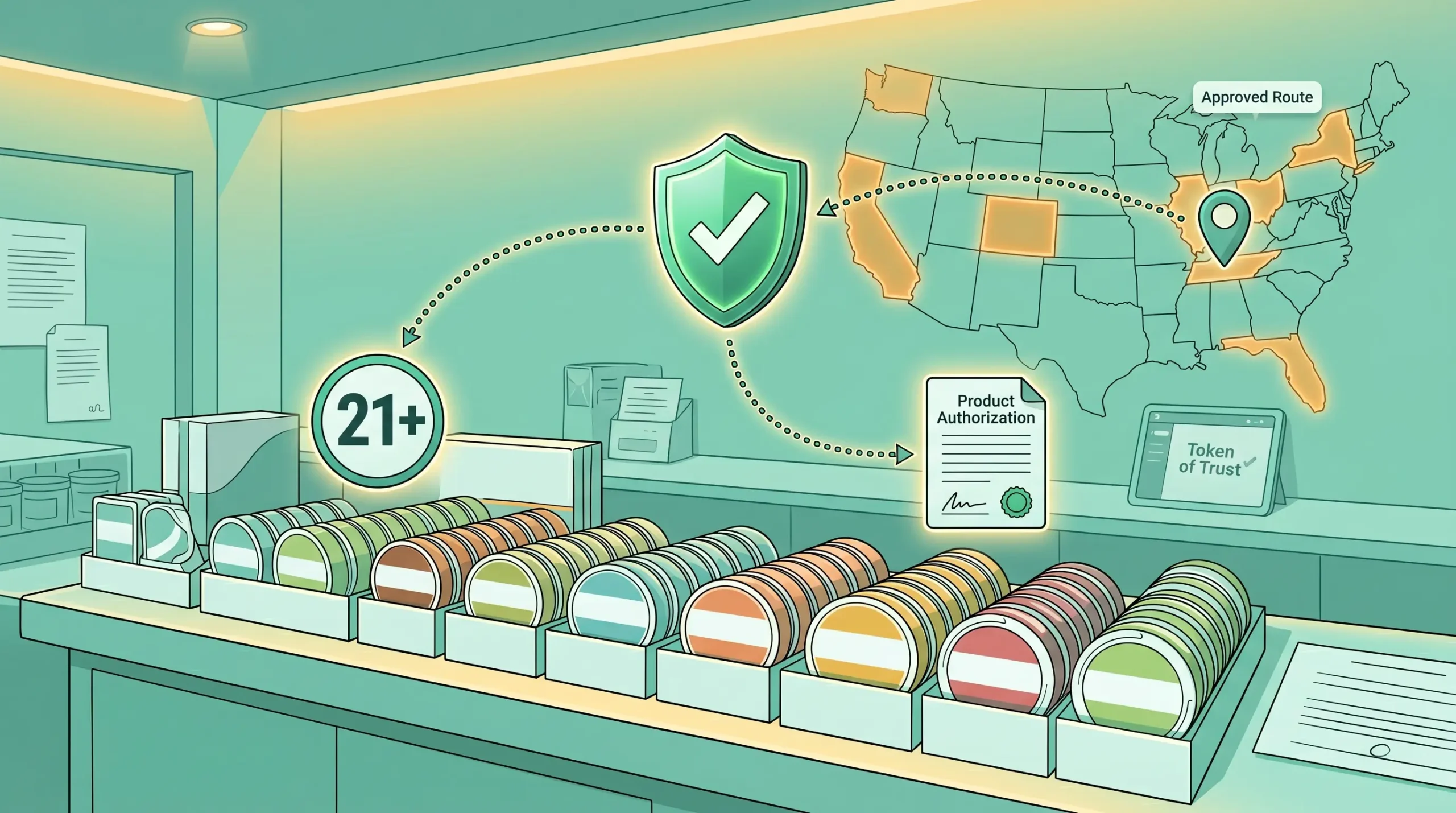
Nicotine pouches and other oral nicotine products are growing fast, and the regulatory category is growing with them. The practical question for retailers, distributors, and marketplaces goes beyond whether regulators control these products. The question is which rules apply and how they differ from ENDS, combustible tobacco, and other nicotine categories. The answer varies by jurisdiction, product definition, and authorization status, and it is still evolving.
This guide explains the current compliance rules for oral nicotine products in plain English. It includes practical notes for product and operations teams.
The Plain-English Takeaway for Busy Operators
Before going deeper, here is the short version:
- People may treat oral nicotine products differently from ENDS or combustibles, but they don’t always do so.
- Some state laws already cover alternative nicotine products, including pouches, under licensing, directory, tax, or youth-access frameworks.
- FDA authorization for specific pouch products does not automatically authorize other pouches or override state restrictions.
- Product category definitions vary by state. What counts as an "alternative nicotine product" in one state may not match the definition used in another.
Businesses that treat pouches as compliance-free take on risks.
They may not see them until a state enforcement action occurs.
A marketplace policy change can also create operational problems.
What Are Oral Nicotine Products?
Oral nicotine products include pouches, lozenges, tablets, and similar forms. They deliver nicotine without combustion, vapor, or contact with tobacco leaves.
Place pouches between the gum and lip. They typically contain nicotine, a plant-based filler, and flavoring. Most do not contain tobacco leaf.
Lozenges dissolve in the mouth. Companies may sell them as consumer products. In pharmaceutical form, they may help people stop smoking.
The key operational point is this: non-combustible does not mean unregulated. At least one law covers most oral nicotine products sold through regulated channels. These laws may be federal, state, or both. The question is which rules apply to which products in which jurisdictions.
See our guide to PACT Act compliance requirements for vape and nicotine retailers
What the FDA's ZYN Authorization Means and Does Not Mean
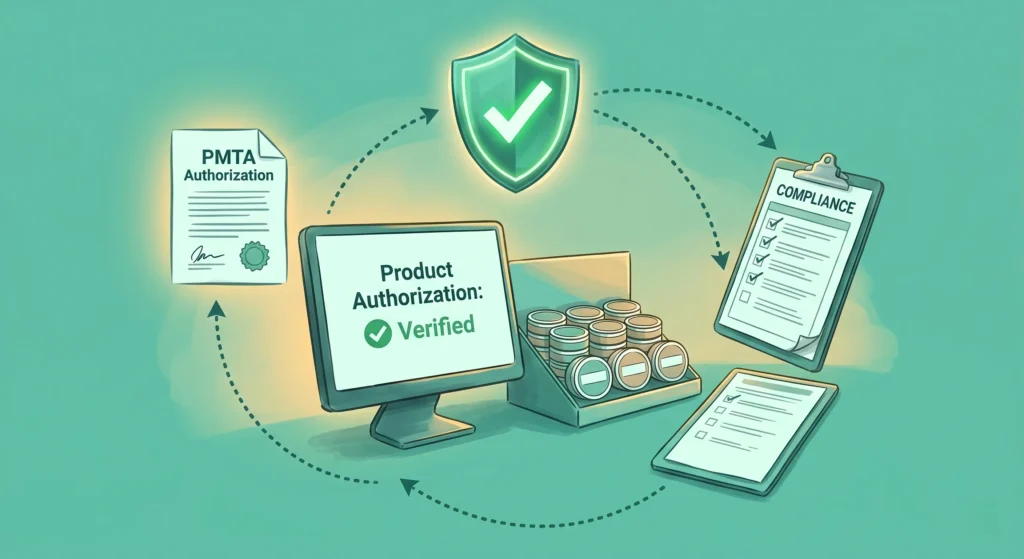
In January 2025, the FDA authorized 20 ZYN nicotine pouch products through the Premarket Tobacco Product Application (PMTA) pathway. This was a notable milestone for the oral nicotine category.
What the authorization means:
- Those specific ZYN products, at their listed strengths and flavors, have received FDA marketing authorization.
- The FDA granted authorization because it found that marketing those products protects public health under the law.
- Those specific terms now allow companies to legally market the products in the United States.
What the authorization does not mean:
- It does not apply to other nicotine pouch products or brands. Each product seeking federal authorization must go through its own review.
- It does not mean the products are "FDA approved" or safe. FDA has emphasized this distinction.
- It does not override state or local laws. A product with federal authorization may still need state approval. It may face state rules on licensing and directories. It may also face rules on flavors, taxes, age checks, and marketing.
- It does not allow reduced-risk or modified-risk claims unless FDA separately authorizes those claims.
Marketing teams should review any copy that uses “FDA authorized” language.
Confirm it matches the scope of the authorization.
State PMTA and Directory Laws That May Already Cover Pouches
Several states have passed laws that require premarket applications, directory registration, or both. Some of these laws apply to alternative nicotine products. They do not apply only to vapor or tobacco products.
Four state examples identified in current compliance frameworks:
California: California's tobacco product regulations have been expanded to cover broader nicotine and alternative nicotine product categories. Remote sellers must comply with applicable state and local laws based on the delivery destination.
Alabama: Alabama’s framework has a broad scope. It includes oral nicotine pouches under its alternative nicotine product coverage.
North Carolina: North Carolina’s PMTA-type law covers alternative nicotine products. This may include nicotine pouches, based on product classification.
Louisiana: Louisiana's V.A.P.E. Directory applies to alternative nicotine products, which can include oral nicotine formats.
The operational impact is this. Product catalog teams may need to track whether a directory in these states lists oral nicotine products. They may also need to track the products’ authorization status. They may need to track more than just ENDS products.
Definitions That Determine Whether Pouch Rules Apply
Category definitions are doing a lot of work in this space. Whether a specific state rule covers a nicotine pouch often comes down to which definition the law uses.
Alternative Nicotine Product
This term often refers to non-combustible nicotine products. These products are not tobacco-derived or do not use vapor delivery. Many newer state frameworks use this definition to cover products outside traditional "tobacco product" or "vapor product" categories.
Tobacco Product
Some states define "tobacco product" broadly.
This can include synthetic nicotine products and nicotine analogs.
It can also include any product with or from nicotine.
This applies no matter how the product delivers nicotine. In those states, a pouch may be a "tobacco product" under the law even if it contains no tobacco leaf.
Oral Nicotine Product
Newer bills and state regulations increasingly use product-specific definitions that name oral nicotine products directly. These definitions may or may not require tobacco derivation, and they may or may not include synthetic nicotine.
Practical step: For each state where you sell or ship, find the exact statutory definition. Confirm which product categories it includes. Do not assume a prior analysis of ENDS rules applies to pouches.
Operational Checklist for Oral Nicotine Sellers
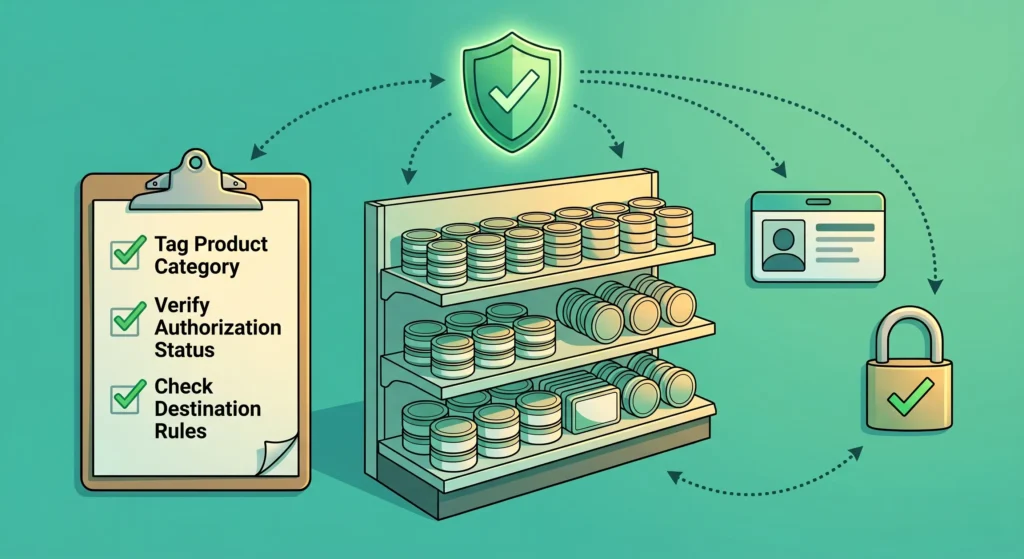
Use this as a working framework. Confirm jurisdiction-specific requirements with legal counsel.
Product Tagging
- Create separate product category fields for oral nicotine pouches, lozenges, ENDS, tobacco-derived nicotine, and synthetic nicotine
- Tag each SKU by nicotine source, format, flavor, and strength
- Record FDA authorization status by exact product and SKU, not just by brand
- Flag products that have not received authorization or that have received a marketing denial order
- Review packaging and marketing copy for reduced-risk or "FDA approved" language
State and Directory Compliance
- Map each product against alternative nicotine product definitions in states where you sell or ship
- Track directory or certification status for states with PMTA directory requirements (including California, Alabama, North Carolina, and Louisiana)
- Confirm whether state licensing or tax obligations apply to the oral nicotine category separately from ENDS
- Apply destination-based rules when shipping to states where remote seller obligations follow the shipping address
Age Verification and Checkout Controls
- Apply 21+ age verification at checkout for all oral nicotine product purchases
- Use product-specific eligibility rules to separate pouch compliance logic from ENDS logic
- Block or flag shipments to destinations where specific pouch products or formats are restricted
- Maintain checkout logs showing age check, product category applied, and destination rule used
Marketing and Advertising Review
- Confirm that marketing copy does not use overbroad "FDA authorized" language
- Review ad targeting for compliance with youth-exposure restrictions tied to authorized products
- Audit listing imagery and product descriptions for youth-appeal elements in applicable jurisdictions
How Token of Trust Supports Oral Nicotine Compliance Workflows
Token of Trust helps age-restricted commerce teams build verification and product-rule workflows. These workflows can adapt as oral nicotine laws evolve.
Age Verification and Age Gates: Confirm buyer age and identity before any oral nicotine product ships. Supports customizable rules by product category, including separate logic for pouches versus ENDS versus other nicotine formats.
Product-Rule Separation: Token of Trust's checkout integration allows operators to apply different eligibility rules to different product categories. ENDS rules and oral nicotine rules can run independently, which matters as state laws increasingly treat them differently.
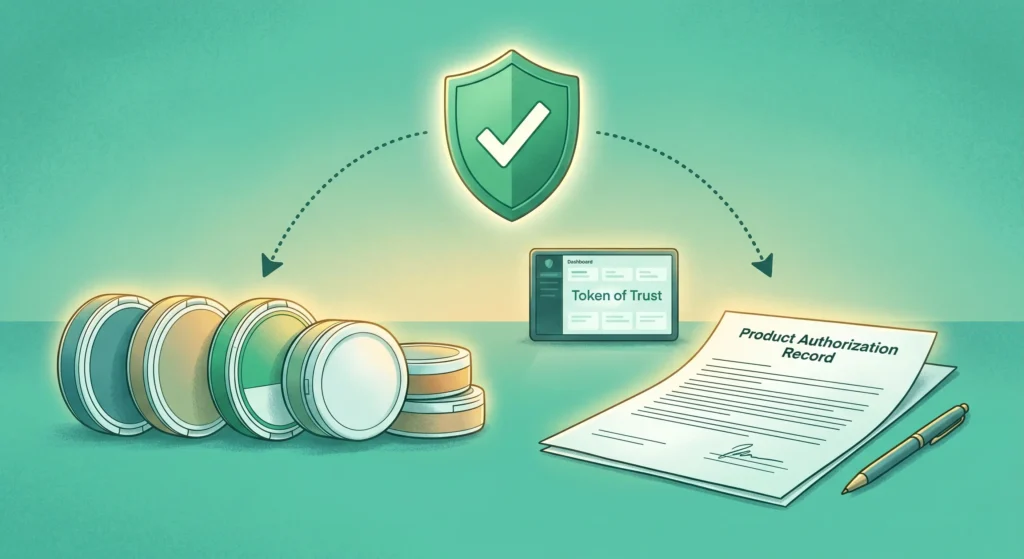
Documentation Workflows: As states expand directory and authorization rules for alternative nicotine products, a system helps. It collects, stores, and retrieves manufacturer documents, which reduces manual risk. Token of Trust supports documentation collection as part of seller and merchant onboarding.
Audit-Ready Logs: Every verification event is logged with outcome, product category applied, and destination rule used. Compliance teams can produce records that show the specific controls in place at the time of each transaction.
Token of Trust helps translate legal rules into operational checkout and onboarding workflows. This is not a substitute for legal counsel on product- and jurisdiction-specific questions.
Get Started
Ready to build age verification, product category controls, and audit-ready workflows for your oral nicotine product line?
Frequently Asked Questions
Q: Are nicotine pouches regulated as tobacco products?
A: It depends on the state. Some states define "tobacco product" broadly enough to include pouches, even if the product contains no tobacco leaf. Others use a separate "alternative nicotine product" definition. The product category and the jurisdiction determine which rules apply, and those can differ significantly from state to state.
Q: Does the FDA's ZYN authorization apply to other nicotine pouch brands?
A: No. The January 2025 FDA authorization applies only to the specific ZYN products listed in that authorization. It applies only to the listed strengths and flavors. Other pouch brands and products must go through their own PMTA review to receive federal marketing authorization.
Q: Must state tobacco product directories include oral nicotine products?
A: In some states, yes. States including Alabama, North Carolina, Louisiana, and California have frameworks that apply to alternative nicotine products, which can include pouches. Directory and certification requirements vary by state. Businesses should confirm their obligations in each state where they sell or ship.
Q: Is age verification required for nicotine pouch sales? Federal law says you must be 21 to buy tobacco and nicotine products.
Oral nicotine products usually follow this rule too. They also follow state rules for age checks. Businesses selling pouches online or through delivery should apply age verification at checkout as a standard control.