
2026 Nicotine Compliance: 5 Layers Most Retailers Miss
You passed every compliance audit in 2023. Your checkout flow has age verification. Your staff knows the rules. And right now, even if you do not know it, three
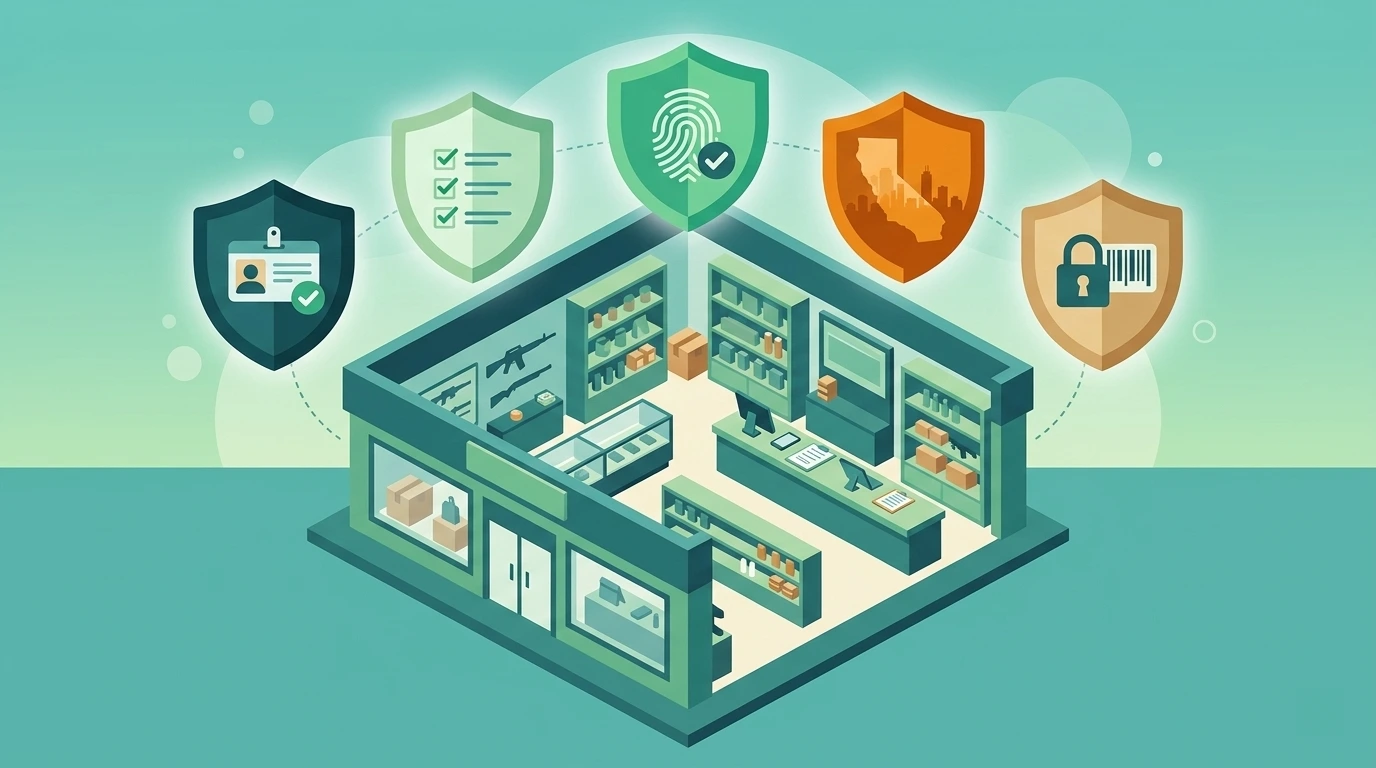
You passed every compliance audit in 2023. Your checkout flow has age verification.
Your staff knows the rules. And right now, even if you do not know it, three of five compliance layers expose you. Regulators are actively enforcing these layers.
Picture this: a mid-size vapor retailer in Ohio. They sell e-liquids, disposable devices, and nicotine pouches. They ship to customers in twelve states.

In March 2026, they receive an enforcement notice — not from a state they ignored, but from a state they thought they had covered. The notice cites inventory records they cannot produce and a product classification discrepancy their POS system never flagged. The fine is significant.
The reputational damage is worse. Their age verification was flawless. It did not matter.
Checkout verification was the whole compliance game in 2020. In 2026, it is one of five distinct layers where your business can break down — and most operators have hardened exactly one of them.
Layer 1: Supply Chain — Do You Know Who Made Your E-Liquid and Where They Made It?
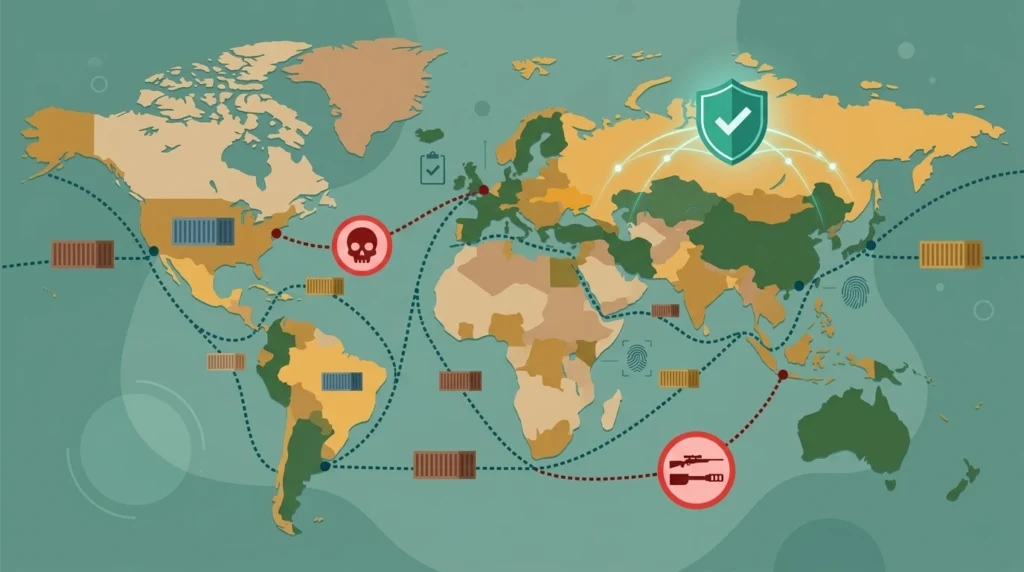
Some states now prohibit the sale of nicotine products manufactured in countries designated as foreign adversaries. This is not a labeling preference — it is a ban with teeth.
Your exposure lives in your purchase orders and your supplier documentation, not your storefront. If your distributor cannot tell you the country of manufacture for every SKU you carry, you are selling blind. Proof-based compliance means you collect and keep country-of-origin certificates for every product. You do this before it reaches your shelf, not after you get a notice.
Layer 2: Inventory — Can You Prove What You Held Before a Tax Change?
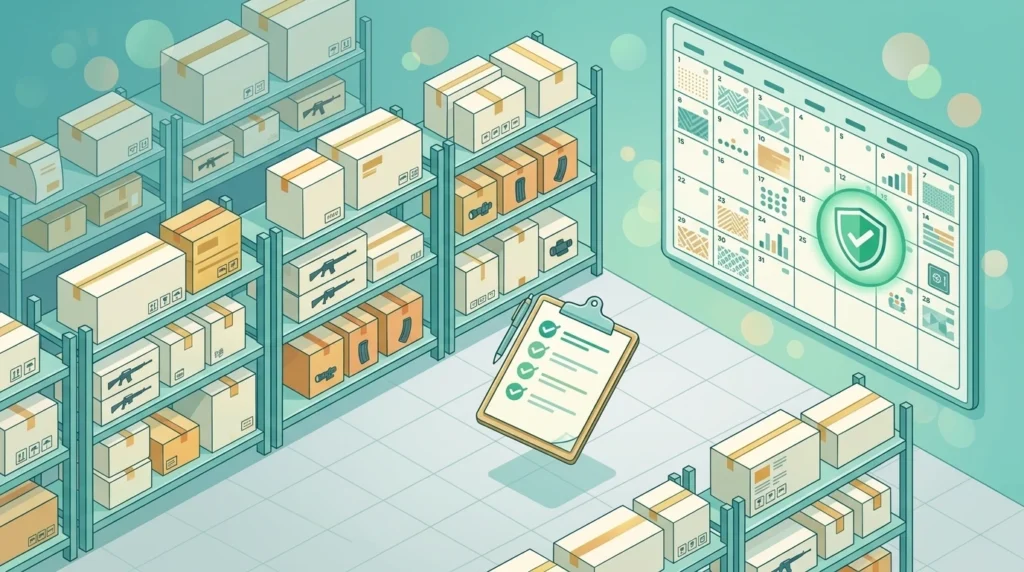
States are tying tax obligations to inventory snapshots taken on the effective date of new rates. If you cannot document what stock you held on a specific date, you may owe tax. Regulators may make assumptions, and they often choose the higher amount.
The gap is in your inventory management system. It depends on whether it timestamps stock levels with the precision an audit requires. Compliant operators pull and store a certified inventory report the night before any rate change starts.
Layer 3: Product Authorization — Is Every SKU Cleared to Sell Where You're Selling It?
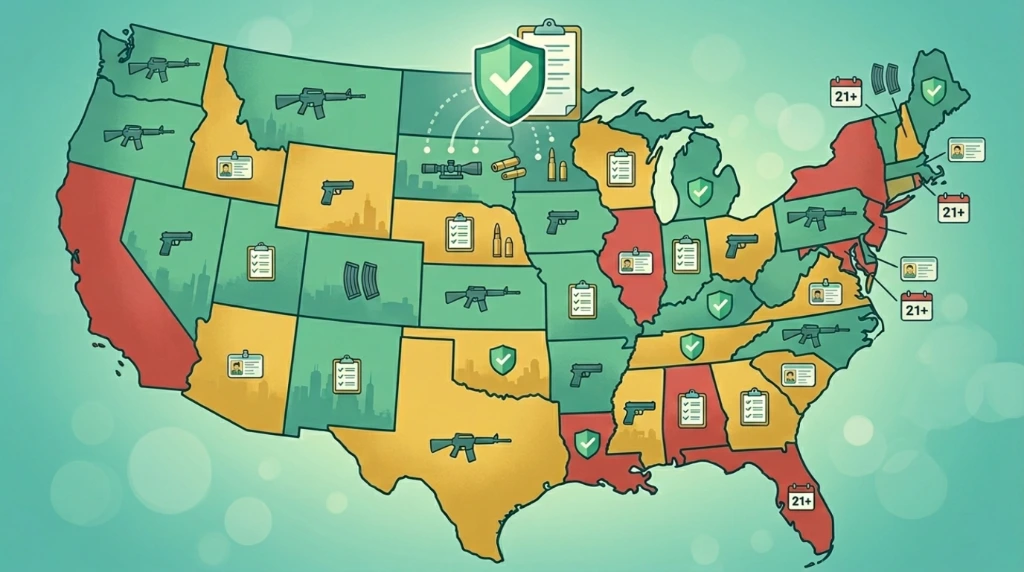
Virginia, Pennsylvania, and more states now require certain nicotine and vapor products to get state approval before sale. Your SKU may be legal in your home state, but prohibited in a state you ship to daily.
The gap is between your product catalog and your state-by-state eligibility matrix. Most operators do not have this matrix. Real compliance means matching each active SKU to its current approval status in every shipping state. It also means pulling products as soon as that status changes.
Layer 4: Classification — Is Every Product Mapped to the Right Tax Category?
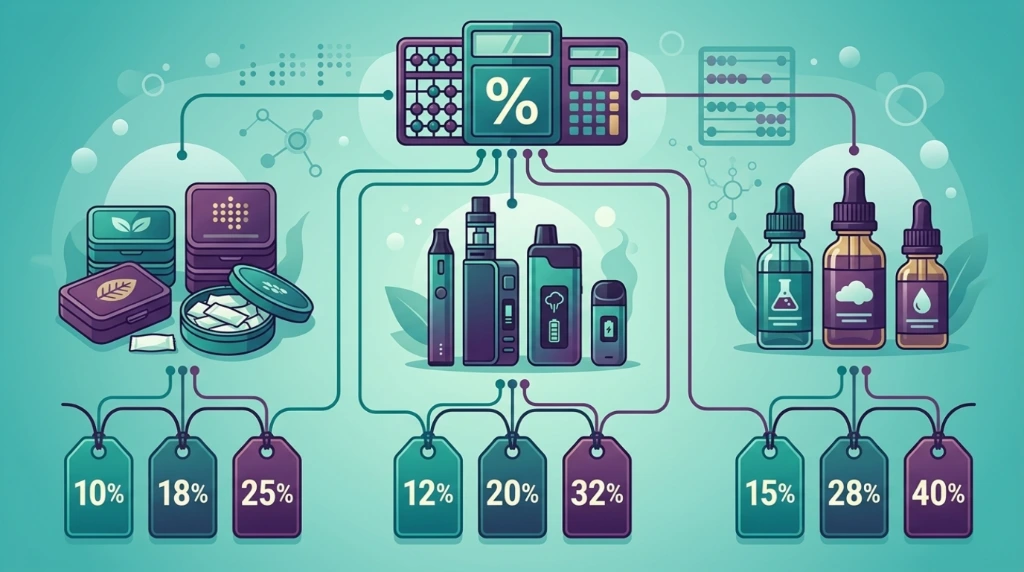
Utah and other states use different tax rates based on product classification.
Rates may depend on nicotine content, device type, or liquid volume. A misclassification does not just produce the wrong tax rate. It produces the wrong filing, the wrong remittance, and the wrong audit trail.
The gap is in your POS and ERP setup. Someone made a classification choice during setup. No one has reviewed it since.
Correct compliance means you audit your product taxonomy against current state definitions at least quarterly. States update those definitions, and your system does not auto-update.
Layer 5: Delivery — Does Age Verification Travel With the Package?
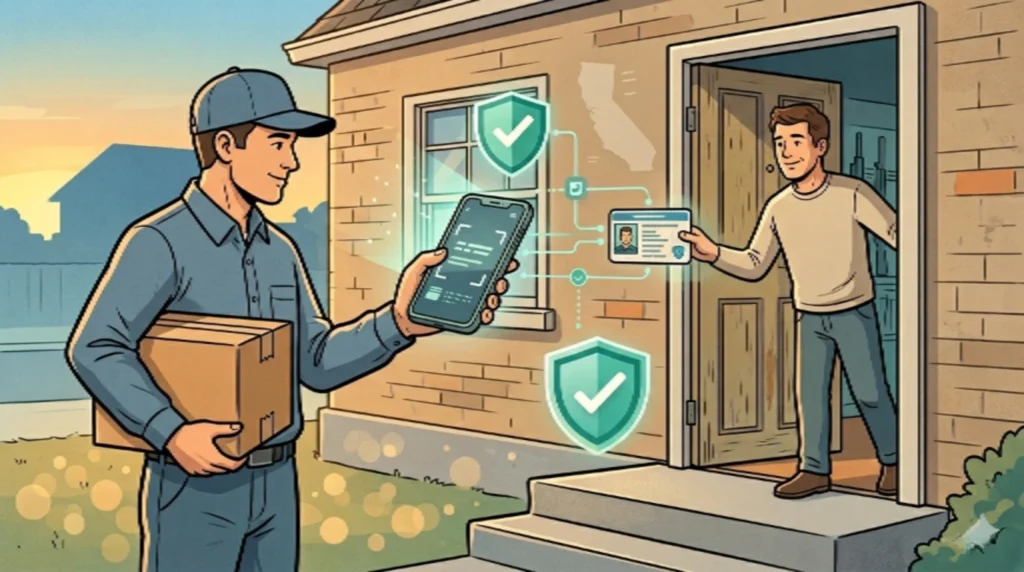
Kentucky and many other states require age checks at delivery, not only at the time of sale. Your checkout flow is not enough. Your delivery driver — or your carrier's driver — must verify age at the door.
The gap is in your last-mile logistics. Some carriers lack training, contracts, or equipment to check age at delivery. Compliant operators choose carriers with proven age-check protocols.
They keep records that prove delivery. They add carrier compliance requirements to vendor contracts. Not their FAQ page.
What Proof-Based Compliance Actually Looks Like in 2026
You are not non-compliant because you ignored the rules. You are non-compliant because the rules expanded and your compliance infrastructure did not expand with them. You still need to verify the checkout. It is also now insufficient.
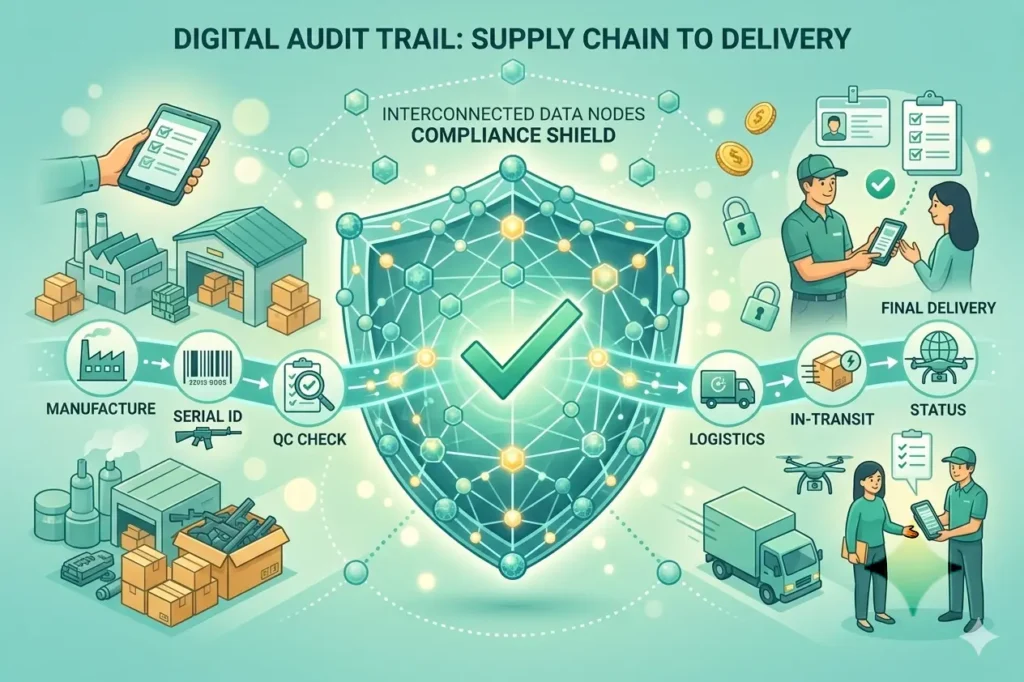
The operators who avoided enforcement in 2025, and will avoid it in 2026, share one trait. They built compliance as a data layer, not a checklist. Every product has a documented origin. The system timestamps and retains every inventory snapshot.
Every SKU has a state-by-state authorization record. A current state definition ties to every tax classification. We confirm every delivery with a signed, carrier-level age verification record.
This is where Token of Trust functions as infrastructure rather than a feature. Its age verification layer does not stop at checkout. It links to delivery workflows, carrier checks, and an audit-ready documentation chain.
Across all five compliance layers, Token of Trust gives operators one clear record of who verified what, when, and how. It covers the supply chain, the shelf, and the last mile.
If you protect one point but leave everything else exposed, you do not comply. You are lucky. In 2026, regulators stop waiting for that luck to run out.
FAQ
Q: What are the main nicotine compliance requirements for retailers in 2026? Retailers must follow compliance standards across five areas.
They must check where products come from in the supply chain.
They must prove they had inventory before tax changes.
They must ensure the state approves the products.
They must apply the correct tax classification.
They must check the customer’s age at delivery.
Q: Is age verification at checkout enough to satisfy state nicotine regulations? A: No. Multiple states now require age verification at the point of delivery, not just at purchase. Checkout-only verification leaves retailers exposed under delivery compliance rules in states like Kentucky.
How can I confirm that my e-liquid products have authorization for sale in every state where I ship them? A: You need a state-by-state authorization matrix mapped to your active SKU list. Authorization status can change when states update approved product registries. This requires active monitoring, not a one-time review.
Q: What records do I need to prove inventory compliance during a tax rate change? A: You need a timestamped inventory report, pulled on or before the effective date.
This applies to any new tax rate in your operating states. The report must show product-level stock quantities with enough detail to match your tax filing for that period.